
Prehistoric History
The Tipton-Haynes limestone cave has existed since the Pleistocene period, or Ice Age, of two million to ten thousand years ago. Biological deposits from an ancient sea that once covered this area formed the sedimentary rock. The newly formed limestone became exposed as sea levels receded. Over time, acidic ground water seeped into the rock to erode and form the present cave that contains two sizeable rooms, small passageways, and formations. Erosion has also exposed fossils of ancient seashells and bone breccia or bones of ancient vertebrates that are imbedded in the limestone walls.
In 2005, the discovery of a fossilized tooth was identified by a paleontologist as that of the dire wolf. This prehistoric wolf has been extinct for over ten thousand years and was similar to the modern gray wolf except that it had a larger, broader head and shorter, sturdier legs. The dire wolf had fairly large teeth and is considered to have had the strongest bite force of any canine specie. In 2025, scientists were able to successfully bring back to life this ancient animal by genetically mixing preserved dire wolf DNA with that of a modern gray wolf.
The historic grounds were also the stomping grounds for animals such as buffalo and elk. These small herds once roamed along the Appalachian Mountains from New York to Florida. The habitat at the base of the nearby Buffalo Mountain provided a bountiful source of small creeks and springs, fertile grasslands, and ease of herd movement with rolling hills. Hundreds of years of constant pounding of the earth under the hoofs of these herds created a lasting “trace” or animal trail. The species of Eastern buffalo and Tennessee elk were hunted to extinction by early explorers and settlers by the turn of the eighteenth to nineteenth century.
Following the herds along this “trace” were prehistoric peoples. Numerous artifacts from these early Native Americans have been found throughout the site. The artifacts range from pottery sherds to projectile points that would suggest this area was once the permanent settlement and hunting grounds for prehistoric peoples and tribes such as the Chisca, Yuchi, and Cherokee.
Animal trails became easy routes for early explorers as they pushed into Native American territory. The first European expedition to reach Northeast Tennessee came in 1540 when a Spanish force led by Hernando de Soto scoured the area in search of gold. The first English exploration of the area came in 1673 under the command of James Needham and Gabriel Arthur. They are noted for following this “trace” as their party explored along Buffalo Mountain and camped near the site’s spring and cave. As settlers began to inhabit the area, these animal trails became early roads.
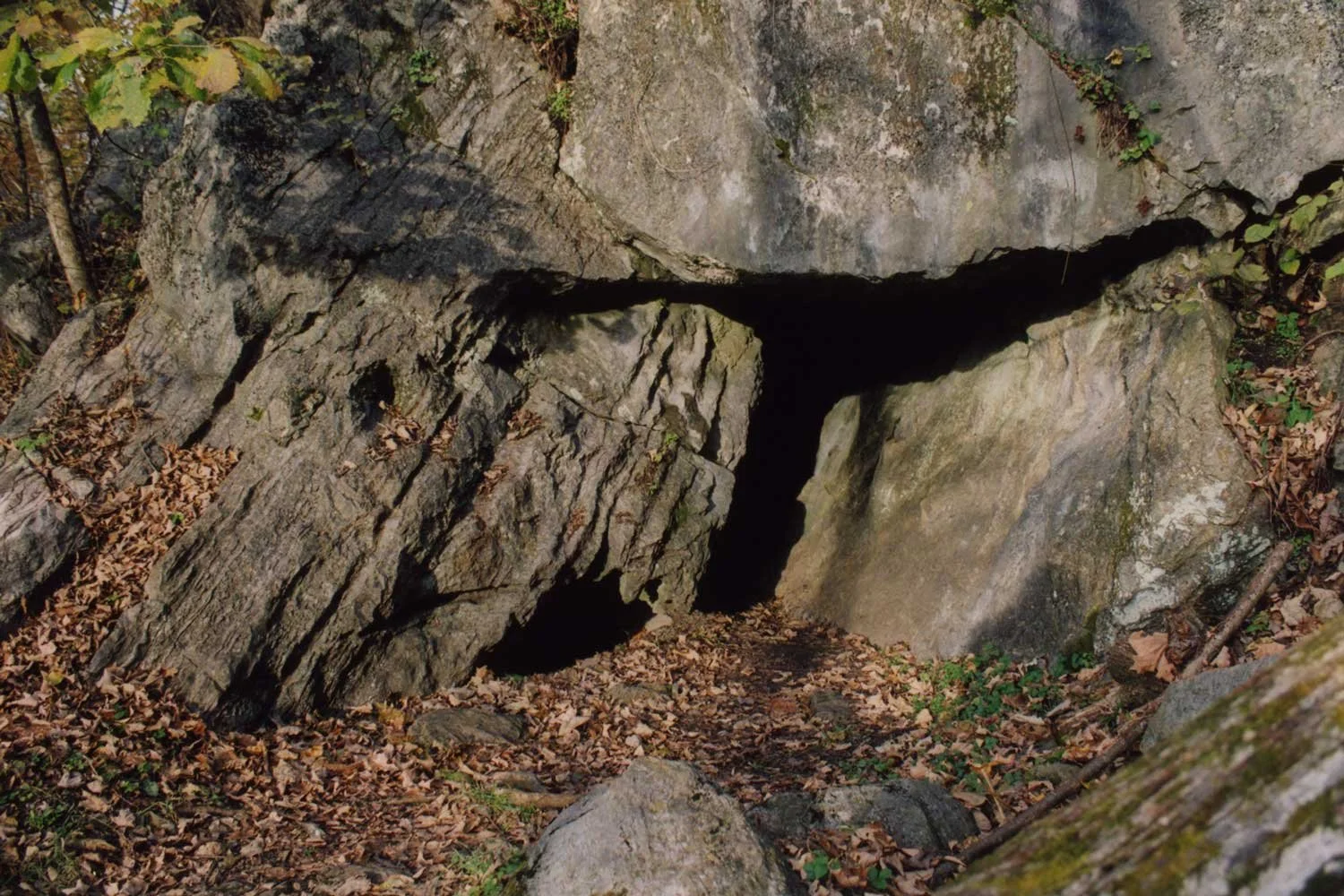
Tipton-Haynes limestone cave entrance.
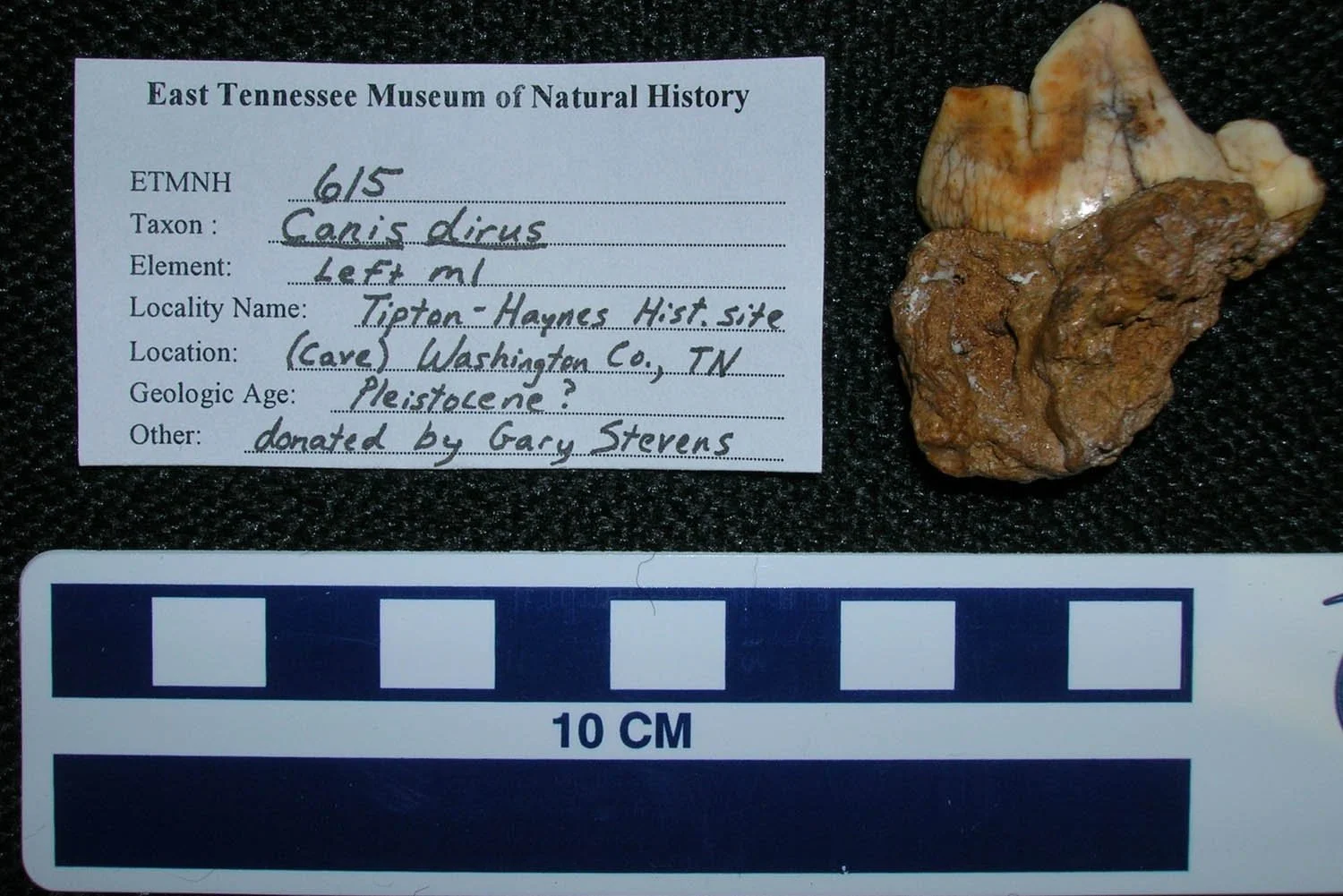
Fossilized dire wolf tooth.
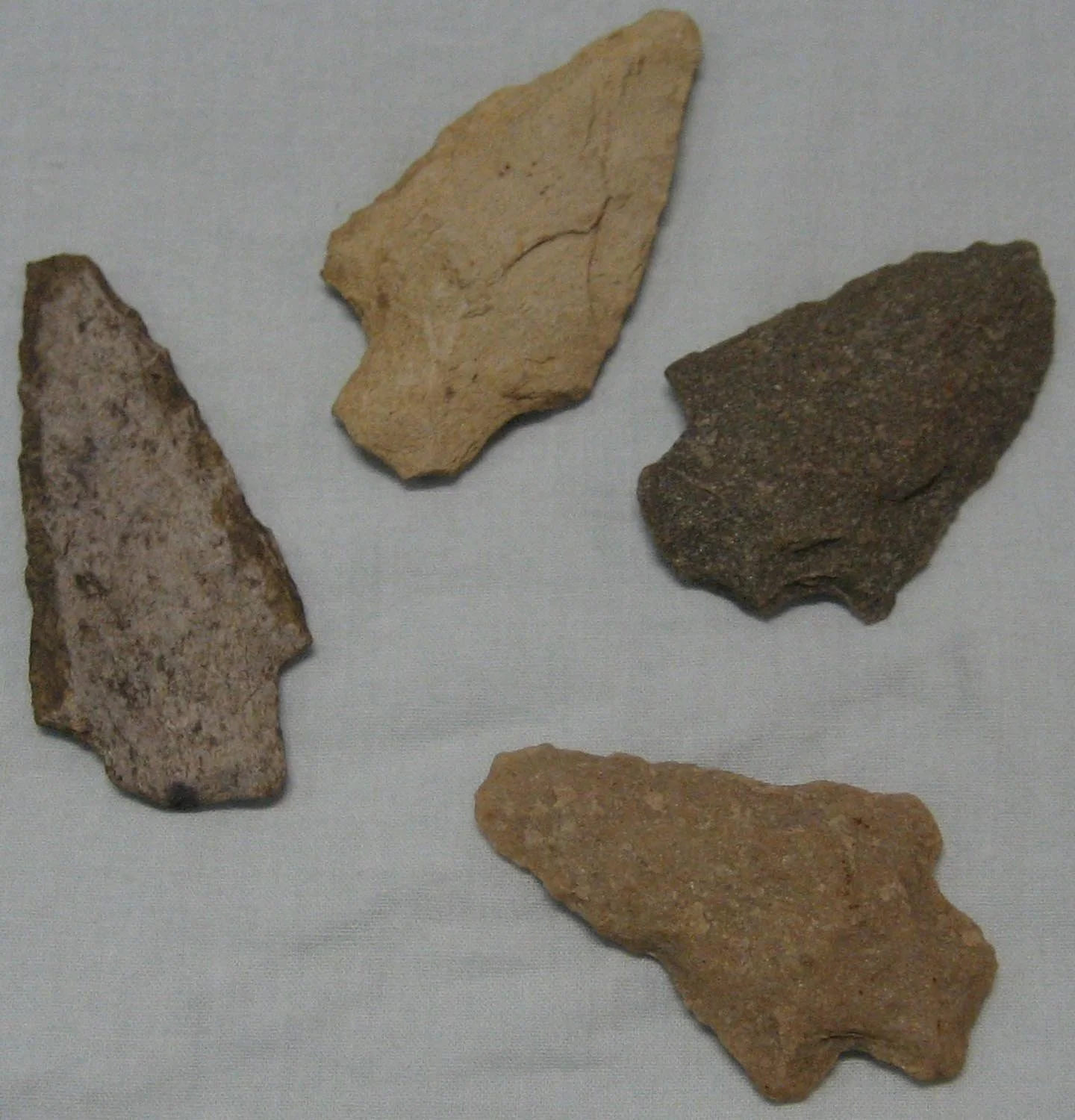
Appalachian Stern Knives.

Artist David Wright’s rendition showing a Native American in war paint.
-
Figure 1. Tipton-Haynes limestone cave entrance.
Figure 2. The fossilized dire wolf tooth that was discovered near the mouth of the cave. The tooth is currently being preserved at the Gray Fossil Site.
Figure 3. Appalachian Stern Knives of the late Archaic Period of 3,000 to 4,000 years ago.
Figure 4. Artist David Wright’s rendition showing a Native American in war paint while holding a European style long rifle.